Bone Conduction Earbuds for Workouts: What They Actually Trade Off Compared to In-Ear
Quick Answer: Bone conduction headphones transmit sound through vibrations to the cheekbone rather than through the ear canal, which keeps ears completely open for situational awareness (traffic, other runners) and eliminates the ear canal irritation or falling-out issues common with in-ear buds — but this same open-ear design produces noticeably less bass response and lower overall sound isolation than in-ear or over-ear options, meaning the tradeoff is safety and comfort versus audio richness.
Which option is ‘better’ genuinely depends on whether situational awareness or audio quality matters more for your specific workout environment.

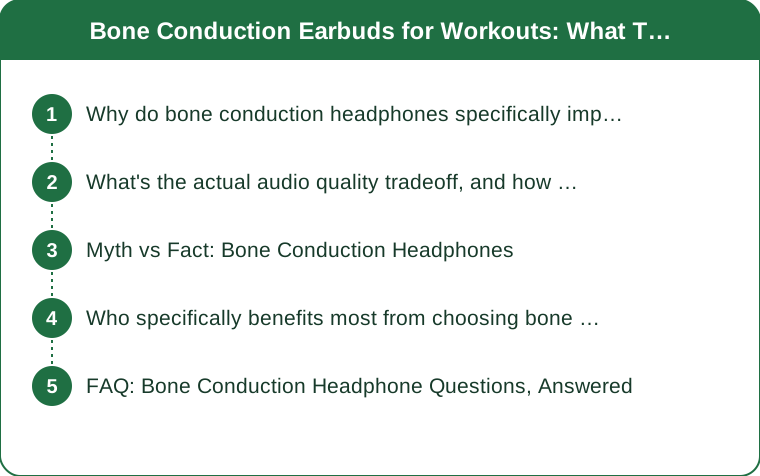
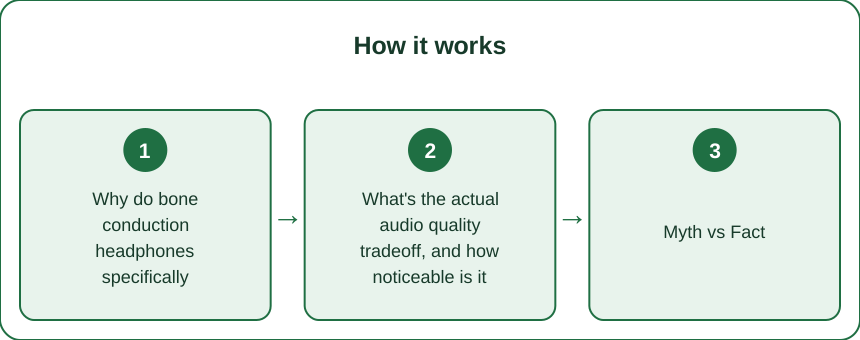
Why do bone conduction headphones specifically improve safety awareness during workouts?
Because sound is transmitted via vibration through the cheekbone rather than blocking the ear canal, the ears themselves remain completely open to ambient environmental sound, meaning you can hear approaching traffic, other runners or cyclists, or someone calling out to you far more clearly than with any in-ear design, even ones with a ‘transparency mode.’
This is specifically why bone conduction has become popular among outdoor runners and cyclists who need to remain aware of their surroundings, compared to indoor gym use where this safety consideration matters less.
What’s the actual audio quality tradeoff, and how noticeable is it in practice?
Bone conduction technology inherently produces weaker bass response and generally less rich overall sound compared to in-ear or over-ear headphones, since vibration-based sound transmission through bone doesn’t reproduce low frequencies as effectively as an in-ear driver sealed against the ear canal.
Most users describe the difference as noticeable but acceptable for workout use (podcasts, motivational music) rather than being suitable for critical or audiophile-level music listening, where the bass and overall richness gap becomes considerably more apparent.

Myth vs Fact: Bone Conduction Headphones
Myth: Bone conduction headphones sound just as good as premium in-ear options now. Fact: Bass response and overall audio richness remain a meaningful, inherent limitation of the technology, even in premium bone conduction models.
Myth: They’re only useful for outdoor running and cycling. Fact: They’re also genuinely useful for anyone with ear canal sensitivity, chronic ear infections, or hearing aid use where standard earbuds are impractical.
Myth: Sound leakage isn’t a concern with bone conduction. Fact: At higher volumes, bone conduction headphones can leak audible sound to nearby people, which is worth considering in quiet or shared environments.
Who specifically benefits most from choosing bone conduction over standard workout earbuds?
Outdoor runners and cyclists prioritizing traffic awareness, people with a history of ear infections or ear canal irritation from standard earbuds, and hearing aid users who can’t easily use in-ear designs all get a specific, meaningful benefit from bone conduction that outweighs the audio quality tradeoff for their particular needs.
Someone primarily doing indoor gym workouts or prioritizing music quality over situational awareness is less likely to find the tradeoff worthwhile, since the safety benefit matters less indoors and the audio limitation becomes the more noticeable factor.
FAQ: Bone Conduction Headphone Questions, Answered
Do bone conduction headphones work well for swimming?
Some models are specifically designed and waterproofed for swimming, using bone conduction to work effectively even underwater, though this is a specific subset of products, not true of all bone conduction headphones.
Is there an adjustment period needed to get used to the sensation of bone conduction sound?
Some users report a brief adjustment period to the vibration sensation against the cheekbone, though most describe it as becoming unnoticeable within the first few uses.
Do bone conduction headphones fit securely enough for high-intensity workouts like HIIT?
Most models use an over-ear or behind-the-head band design specifically for secure fit during high-intensity movement, generally performing well for this use case despite not sitting in the ear canal.
TL;DR:
- Bone conduction headphones keep ears fully open, meaningfully improving outdoor safety awareness
- The tradeoff is noticeably weaker bass and overall audio richness compared to in-ear options
- They’re especially valuable for ear-sensitive users and outdoor runners/cyclists prioritizing awareness
- Indoor gym users prioritizing audio quality are less likely to find the tradeoff worthwhile
The choice comes down to what matters more for your specific workout setting — situational awareness or sound quality.
Keep Reading
This article is for general informational and styling purposes only. Fit, sizing, and product availability may vary.