Why Your Earbuds Fall Out During Some Exercises But Never Others
Quick Answer: Earbuds fall out most during exercises with rapid head rotation, jaw movement, or impact (burpees, jumping, some HIIT moves) because those create sudden multi-directional jostling a steady jog’s repetitive up-down motion doesn’t produce. The seal that holds during rhythmic cardio can’t withstand a sudden lateral jerk.
A 45-minute run barely disturbs the seal. Two minutes into a burpee set, one earbud is already loose. The difference isn’t the earbuds — it’s the type of motion each exercise actually produces.
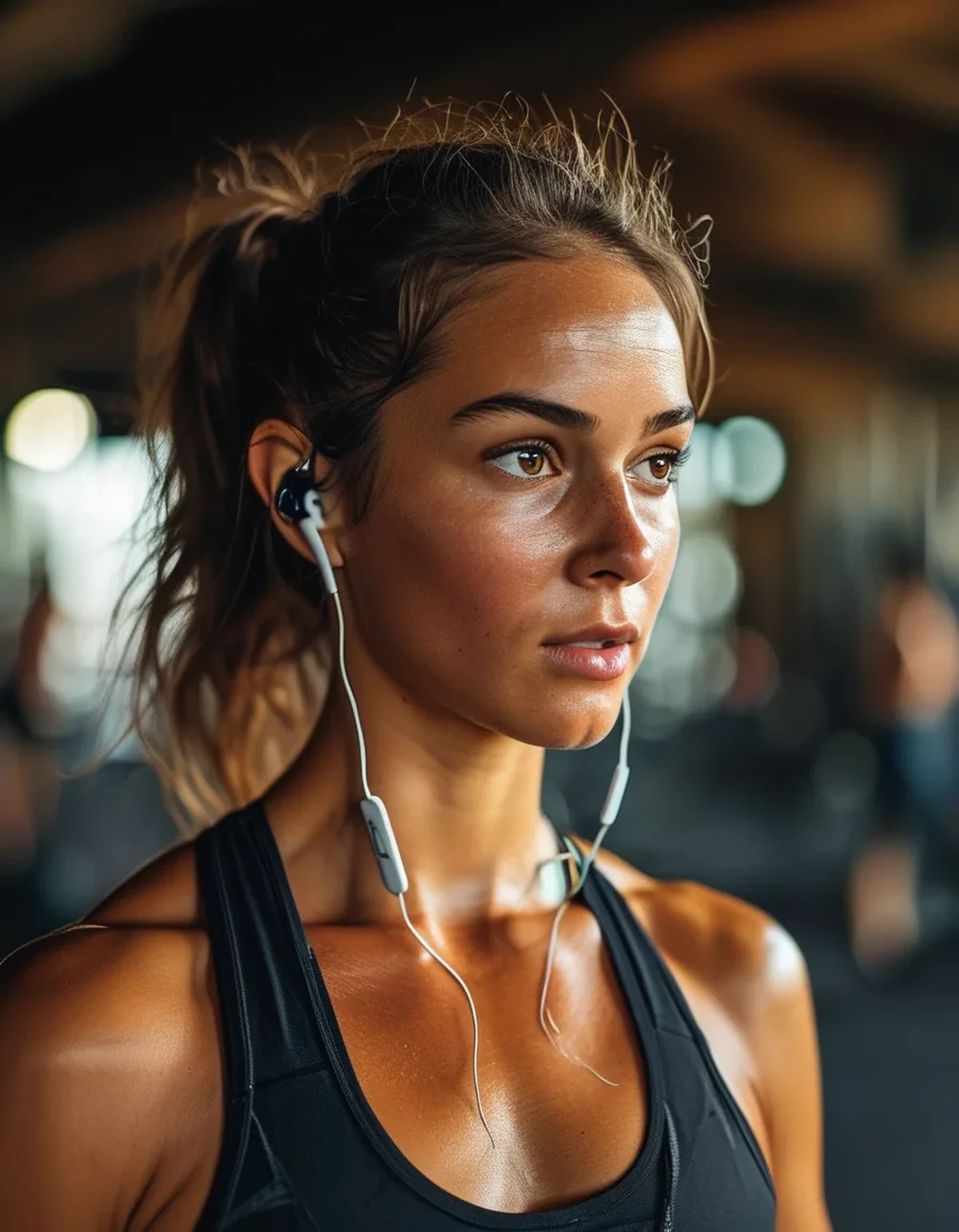
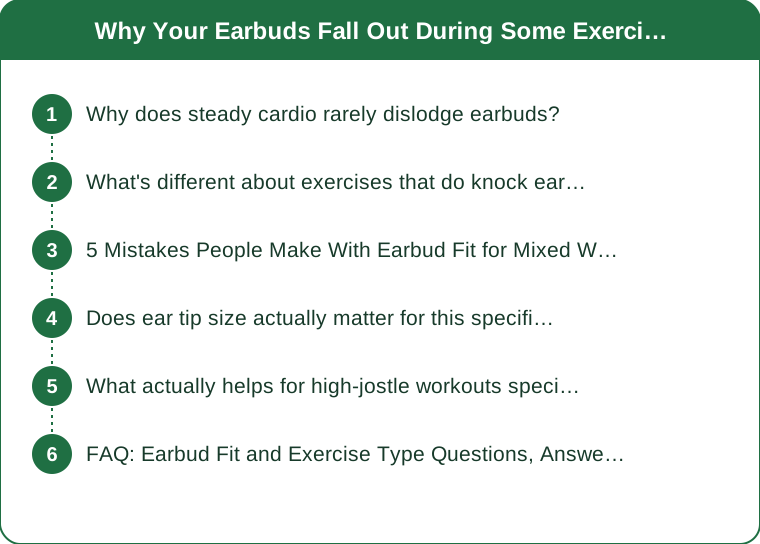
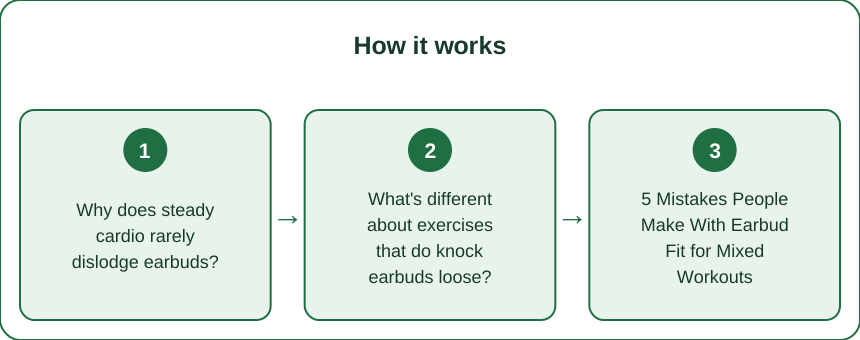
Why does steady cardio rarely dislodge earbuds?
Running and cycling produce repetitive, predictable up-down motion that the ear canal and earbud seal adapt to quickly — the jostling is consistent and rhythmic rather than sudden, which the seal can maintain over long durations.
What’s different about exercises that do knock earbuds loose?
Sudden multi-directional force — burpees, jump squats, and fast head-turning drills create quick lateral or rotational jostling that a seal optimized for repetitive vertical motion isn’t built to resist.
Jaw movement matters too: exercises involving heavy breathing through the mouth or verbal counting can shift ear canal shape slightly, loosening a seal that felt secure during quieter cardio.
5 Mistakes People Make With Earbud Fit for Mixed Workouts
1. Choosing earbuds based only on running reviews, missing how they perform under sudden multi-directional movement common in HIIT.
2. Using the same ear tip size across very different workout types without testing whether a firmer or larger tip holds better for jarring movements.
3. Ignoring ear hooks or wing tips that specifically resist lateral jostling, assuming a standard in-ear design is enough for all exercise types.
4. Reinserting a loosening earbud mid-set instead of stopping briefly to reseat it properly, which usually loosens again within minutes.
5. Not testing fit specifically during the exact exercise type it’ll be used for, assuming a good run-test means it’ll hold for jump training too.
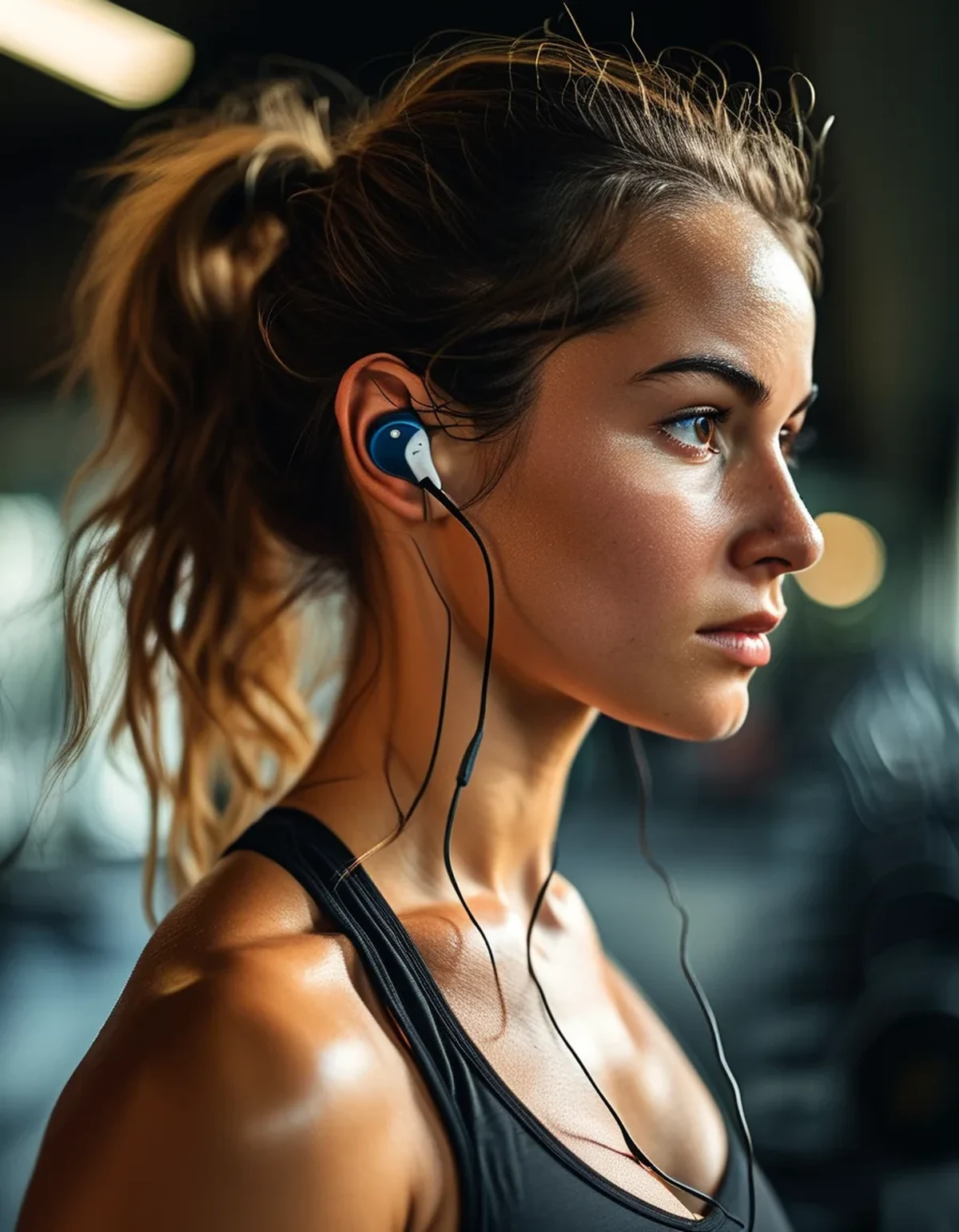
Does ear tip size actually matter for this specific problem?
Yes — a tip that’s slightly too small can seal fine during steady, low-jostle movement but lose its grip the moment sudden lateral force hits it, while a properly sized (sometimes one size up from what feels adequate at rest) tip resists that same jostling better.
What actually helps for high-jostle workouts specifically?
Wing tips or ear hooks designed for stability, rather than a standard bullet-style in-ear design, resist lateral and rotational force significantly better than seal-alone designs.
Testing fit with actual jumping jacks or burpees before a full workout — not just standing still — reveals whether the seal will hold under the specific motion that workout will produce.
FAQ: Earbud Fit and Exercise Type Questions, Answered
Why do my earbuds stay in for running but fall out during HIIT?
HIIT movements like burpees and jump squats create sudden multi-directional jostling that a seal optimized for repetitive running motion isn’t designed to resist.
Do wing tips actually make a meaningful difference for high-impact workouts?
Yes — wing tips and ear hooks specifically resist lateral and rotational force better than a standard in-ear seal alone.
Should I use different earbuds for different workout types?
Not necessarily different earbuds, but testing and possibly adjusting ear tip size or using a wing-tip attachment specifically for high-jostle workouts can solve the problem without buying a second pair.
TL;DR:
- Steady cardio’s repetitive motion rarely dislodges a well-fitted seal
- Sudden multi-directional movement (burpees, jump training) jostles seals in ways running doesn’t
- Wing tips or ear hooks resist lateral force better than standard in-ear designs
- Test fit with the actual exercise type, not just a run, before trusting it for HIIT
The earbuds aren’t failing randomly — different exercises produce genuinely different jostling forces, and the fix is matching the fit to the motion, not just the ear.
Keep Reading
This article is for general informational and styling purposes only. Fit, sizing, and product availability may vary.