Earbuds vs Over-Ear Headphones for Running: Which Actually Makes Sense
Quick Answer: For most runners, earbuds are the better default choice because they’re lighter, don’t trap heat against the ears, and stay more secure during high-impact movement — over-ear headphones can offer better sound isolation and battery life, but tend to feel bulkier and hotter over longer runs.
Both work, but the tradeoffs matter differently depending on run length, weather, and how much you care about audio quality.

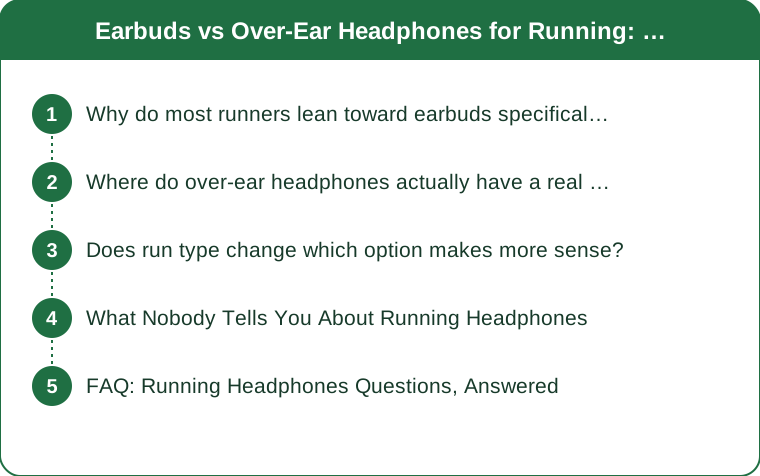
Why do most runners lean toward earbuds specifically?
Weight and heat are the biggest factors — earbuds add minimal weight and allow more airflow around the ears, which matters over a long, sweaty run. Over-ear headphones, even lightweight ones, trap more heat and can feel heavier as a run goes on, especially in warm weather.
Where do over-ear headphones actually have a real advantage?
Battery life and sound isolation tend to favor over-ear designs — larger ear cups can house bigger batteries, often lasting longer per charge than small earbuds, and passive noise isolation from ear cups can be more consistent than an earbud’s seal, which varies by ear shape.

Does run type change which option makes more sense?
Yes — for short, high-intensity runs or speed work, earbuds’ lighter, more secure fit matters more. For longer, steady-state runs where audio quality and battery life matter more than a snug athletic fit, over-ear headphones become more competitive, especially models designed with breathable ear cups.
What Nobody Tells You About Running Headphones
Here’s what most gear comparisons skip: outdoor safety awareness matters more than either format’s audio specs. Whichever option you choose, look for models with an ambient sound mode or open-ear design if you run near traffic — sound isolation that’s great for gym use can become a real safety liability on outdoor routes with vehicles or cyclists.

FAQ: Running Headphones Questions, Answered
Do bone-conduction headphones solve the earbud-versus-over-ear tradeoff?
They solve the safety and heat concerns well since ears stay uncovered, though many runners report the audio quality and bass response is noticeably weaker than either sealed earbuds or over-ear headphones.
Does sweat resistance differ meaningfully between the two formats?
Both formats now commonly offer sweat and water resistance ratings, so this is less about earbuds versus over-ear and more about checking a specific model’s IPX rating before buying.
Is it worth having both formats for different types of runs?
For runners who do a real mix of short speed sessions and long steady runs, owning both is a reasonable choice rather than compromise, since the ideal pick genuinely shifts by run type.
TL;DR:
- Earbuds generally win on weight, heat, and secure fit during high-impact running
- Over-ear headphones tend to offer better battery life and sound isolation
- Run type (short and intense vs. long and steady) can shift which option makes more sense
- Outdoor safety awareness matters more than either format’s raw audio specs
There’s no universal winner — match the format to your typical run length and running environment.
Keep Reading
This article is for general informational and styling purposes only. Fit, sizing, and product availability may vary.