Why Workout Earbuds Start Hurting After an Hour but Feel Fine at Twenty Minutes
Quick Answer: Ear pain that only appears after 45 to 60 minutes is almost always sustained pressure rather than a bad fit. Cartilage and the skin of the ear canal tolerate contact well briefly and poorly for long periods, and heat and sweat make the ear swell slightly, increasing the pressure over time. Fixes: go one tip size down rather than up, choose foam tips that expand to fill rather than press outward, swap ears or take a ten-second break every 30 minutes, and prefer an open-ear or bone conduction design for anything over ninety minutes.
Twenty minutes in, perfect. Fifty minutes in, you are aware of your left ear. Seventy minutes in, you are taking them out.
The usual advice is to find a better fit. Usually the fit is fine and the duration is the variable.

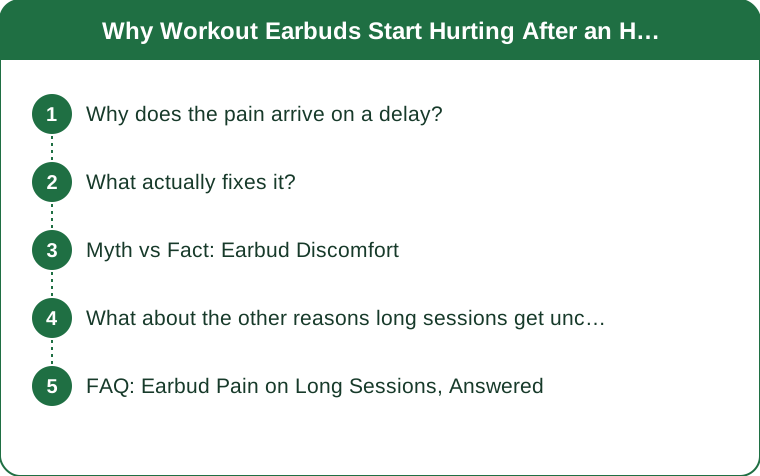
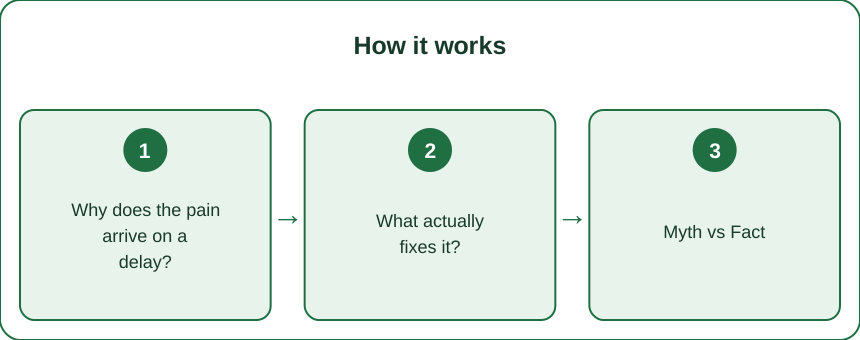
Why does the pain arrive on a delay?
Sustained contact pressure is different from momentary pressure. Skin and cartilage tolerate contact easily for short periods. Continuous pressure at the same point reduces local blood flow and produces discomfort over time - the same mechanism that makes sitting on a hard chair fine for ten minutes and painful for two hours.
Your ears swell slightly during exercise. Blood flow increases and warm, humid conditions cause mild tissue swelling. An earbud that fits comfortably in a cool ear at rest sits noticeably tighter in a warm one at minute fifty.
Sweat changes the interface. Moisture makes tips grip more and slide less, and it can cause a slight suction effect on repositioning. That combination increases the effective pressure without anything having moved.
A too-large tip is worse over time, not immediately. Oversized tips feel secure in the first minutes because they lock in place. That security is outward pressure on the canal wall, which is exactly the thing that becomes painful an hour later.
Jaw movement contributes. The ear canal changes shape when you talk, chew, or clench, and a tightly wedged tip is repeatedly compressed against tissue with each of those movements.
And the pressure is unevenly distributed. Most ear canals are asymmetric and slightly oval, so a round tip presses hardest at two points rather than evenly around, which is why the pain is often specific and one-sided.
What actually fixes it?
Try one size down before anything else. The instinct when earbuds hurt is to look for a better seal, which usually means a bigger tip. For duration-related pain the correct move is almost always the opposite.
Switch to foam tips. Memory foam compresses on insertion and expands to fill the canal shape rather than pressing outward against it. For long sessions this is the single most effective change available and it is inexpensive.
Use different sizes in each ear. Ears are frequently asymmetric, and most tip kits include several sizes for exactly this reason even though almost nobody uses them that way.
Reposition every half hour. Ten seconds of removing and reinserting relieves the sustained pressure and resets the interface. Setting it as a habit at a landmark on your route makes it automatic.
Consider open-ear or bone conduction for long sessions. These designs put nothing in the canal at all, which eliminates the mechanism entirely. They trade sound isolation and bass for the ability to wear them for three hours, which is the right trade for long endurance work.
And clean the tips regularly. Accumulated debris changes the effective size and shape of the tip and is a genuine hygiene issue for anything sitting in a warm, humid canal for hours a week.

Myth vs Fact: Earbud Discomfort
Myth: Pain means they do not fit. Fact: pain that appears only after an hour usually means the fit is slightly too tight for sustained wear, not that it is wrong. Immediate discomfort is a fit problem; delayed discomfort is a pressure-over-time problem.
Myth: A bigger tip gives a better seal and better sound. Fact: the best seal comes from the tip that matches your canal, not the largest one you can insert. Oversized tips distort and often seal worse while pressing harder.
Myth: Foam tips are only for sound quality. Fact: their main practical advantage for long sessions is that they conform to the canal rather than pushing against it, which changes the comfort profile substantially.
Myth: Expensive earbuds will not do this. Fact: this is an anatomy and duration issue rather than a price one. Premium earbuds with the wrong tip size cause exactly the same problem.
Myth: If they hurt you should push through. Fact: persistent pressure on ear tissue is not something to train through, and ear pain that continues after removal, or comes with hearing changes or discharge, needs medical attention rather than a different tip.
Myth: Both ears should use the same size. Fact: asymmetric ears are common, and mixing sizes is a normal and effective solution rather than a sign something is wrong.
What about the other reasons long sessions get uncomfortable?
Volume creeping up. As you fatigue and as ambient noise rises, people tend to increase volume without noticing. Sustained high volume is a hearing risk independent of comfort, and it is worth checking rather than assuming.
Moisture in the canal. Prolonged humidity in a sealed canal is not ideal for ear health, and people who train long and often should be drying their ears and cleaning tips deliberately. Any pain with discharge, itching, or muffled hearing should be seen by a clinician.
Weight and cable drag. On over-the-ear hook designs, the weight is carried by the ear cartilage, and an hour of that produces a different kind of ache entirely - one that a tip change will not fix.
Glasses or sunglasses arms. Anything else resting on the same cartilage compounds the pressure. Long sessions in sunglasses plus hook-style earbuds is a common and easily missed combination.
Cold and wind. Ears are exposed and become sensitive in cold conditions, and a hard plastic body against cold cartilage is uncomfortable in a way that has nothing to do with fit.
This is general information, not medical advice. Ear pain that persists after removing the earbuds, or occurs with hearing changes, warrants professional assessment.
FAQ: Earbud Pain on Long Sessions, Answered
Why do my earbuds only hurt after an hour?
Because sustained pressure on ear tissue reduces local blood flow over time, and exercise-related warmth and swelling increase the effective pressure. Nothing about the fit changed - the duration did.
Should I go up or down a tip size?
Down, in almost every case of delayed pain. Larger tips feel secure initially by pressing outward, and that outward pressure is precisely what becomes painful later.
Are foam tips better for long workouts?
Generally yes. Foam compresses on insertion and expands to fill the canal shape rather than pushing against it, which distributes pressure more evenly over long periods.
Can I use different sizes in each ear?
Yes, and you probably should. Asymmetric ear canals are common, which is one reason tip kits include multiple sizes.
When should I see someone about ear pain?
If pain persists after removing the earbuds, or comes with discharge, itching, muffled hearing, or ringing, see a clinician rather than experimenting with tips.
TL;DR:
- Delayed earbud pain is sustained pressure, not bad fit - tissue tolerates contact briefly and poorly over an hour.
- Exercise warmth and mild swelling increase the effective pressure as the session goes on.
- Go one tip size down rather than up, and try foam tips that expand to fill rather than press outward.
- Use different sizes in each ear if your ears differ, and reposition briefly every thirty minutes.
- For sessions over ninety minutes, open-ear or bone conduction designs remove the mechanism entirely.
Your ears are not the wrong shape. They are just being asked to hold still under pressure for an hour.
This is general information, not medical advice.
Keep Reading
This article is for general informational and styling purposes only. Fit, sizing, and product availability may vary.