Workout Earbuds That Stay Put: The Complete Buyer's and User's Guide
Ask any regular exerciser about their earbud history and you will hear a graveyard: the pair that died of sweat, the one that ejected during burpees, the one whose case vanished into the gym bag dimension. Workout audio matters more than gear culture admits — music measurably improves workout performance and enjoyment (the research on tempo and perceived effort is real) — and workout earbuds are a genuinely different product than everyday buds: sweat physics, fit-under-motion and situational awareness all change the spec sheet. Here is the complete guide: what to buy for how you train, and how to keep it alive.

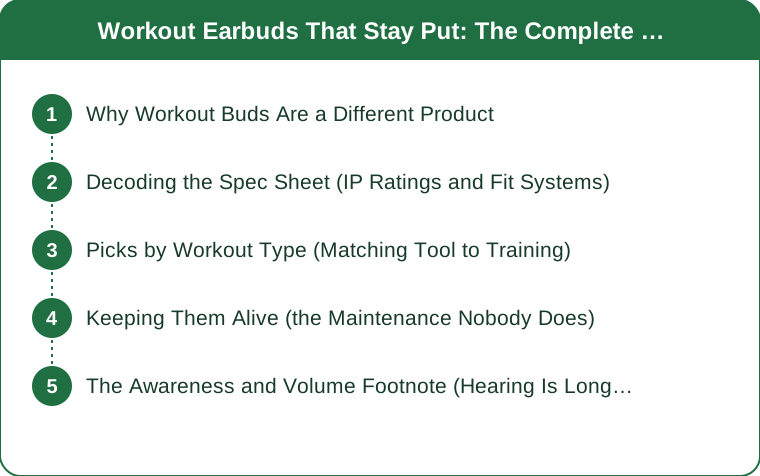
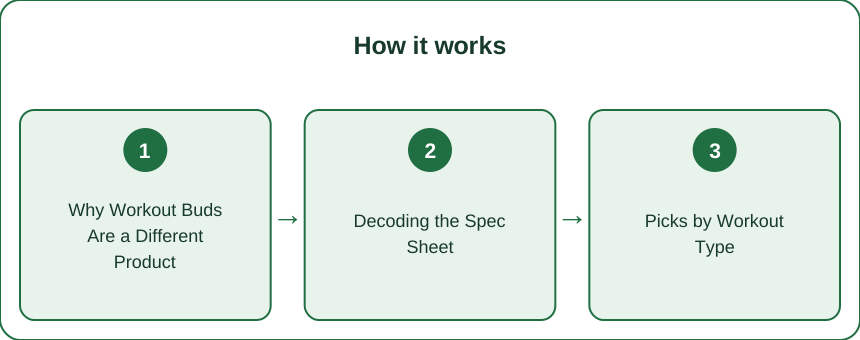
Why Workout Buds Are a Different Product
The three engineering differences: sweat resistance (sweat is salt water — corrosive to electronics; the IP rating system covered below is the difference between a two-year pair and a two-month pair), fit-under-motion (walking barely moves your ears; running, jumping and floor transitions apply repeated dislodging forces — hence wings, fins, hooks and deep-seal designs that everyday buds skip), and situational awareness (outdoor exercisers need to hear cars and surroundings — driving the transparency-mode and open-ear design branches that lifestyle buds treat as afterthoughts). The music-performance science underneath makes the spend rational: synchronized tempo measurably improves pace consistency and lowers perceived effort in studies — your playlist is legal performance enhancement, and the hardware just needs to survive delivering it.
Decoding the Spec Sheet (IP Ratings and Fit Systems)
The two specs that matter: the IP rating’s second digit is the sweat-and-water number — IPX4 (splash and sweat resistant) is the workout minimum, IPX5–7 the comfortable margin for heavy sweaters and rain runners (a rating below IPX4 on a gym pair is a countdown timer; and note the first digit or X is dust — X4 means untested for dust, not failed), and the fit system taxonomy: ear wings and fins (silicone anchors bracing against ear ridges — the standard high-motion solution), over-ear hooks (the maximum-security option — burpee-proof, glasses-negotiation required), deep-seal ear tips (memory foam upgrades over stock silicone are the cheapest fit fix in the category — $15 tips rescue many almost-right pairs), and open-ear designs (air conduction and bone conduction — resting outside or beside the ear canal entirely: the awareness-first branch). Fit trumps sound quality for workout use — audiophile drivers mean nothing mid-ejection at mile three. Buy for the mechanics; the sound follows.

Picks by Workout Type (Matching Tool to Training)
The use-case matrix: runners and cyclists outdoors — open-ear or bone-conduction designs, or sealed buds with genuine transparency mode (traffic awareness is a safety spec, not a preference; many running groups and some races require open-ear) plus secure fins for gait bounce; gym and strength training — standard sealed buds with wings suffice (motion is moderate, awareness less critical, and noise isolation against gym-playlist tyranny is a feature), with case-pocket workflow mattering more than people expect; HIIT, classes and floor work — the maximum-retention tier: hooks or best-in-class fins (burpees, jump rope and mat transitions are the ejection Olympics), sweat rating at IPX5-plus; and swimming — its own category entirely (waterproof IPX8 with onboard MP3 storage, since Bluetooth dies at water’s surface — a niche with mature, purpose-built options). Budget honesty across all tiers: the $50–90 workout-specific mid-market outperforms $200 lifestyle flagships for gym duty, because the spend went to sweat-proofing and fit instead of spatial audio.
Keeping Them Alive (the Maintenance Nobody Does)
The longevity protocol: dry them after sweaty sessions (the single biggest lifespan factor — wipe buds and case-contacts with a dry cloth; never zip sweat-wet buds into the sealed case where moisture marinates the electronics and charging contacts corrode: the mysterious one-bud-stopped-charging death is usually this), clean the tips and grilles weekly-ish (earwax and sweat residue degrade sound and seal — dry brush or slightly damp cloth on removed tips; the muffled-sound complaint is maintenance, not hardware, more often than not), respect the case as the charger it is (pocket lint in the case ports is the second silent killer — a monthly blast of air), replace tips seasonally (seal fatigue is real and $10), and manage battery kindly (extreme heat — the car dashboard, the beach bag in sun — ages lithium faster than use does). Total maintenance time: two minutes weekly. Average lifespan return: double. The graveyard was mostly preventable.
The Awareness and Volume Footnote (Hearing Is Long-Game Gear)
The safety section worth taking seriously: outdoor exercise with sealed buds at volume is a genuine situational-awareness cost (cars, cyclists, other humans — the open-ear category exists because of incident patterns, and single-bud running is the free compromise), and volume itself is the quieter long-term issue: workout audio trends loud (adrenaline plus gym noise plus motivation), and sustained high-volume listening is a documented hearing-loss vector — the 60/60 guideline (under 60% volume, under 60 minutes at a stretch) is a reasonable anchor, noise-isolating tips paradoxically help (a good seal lets lower volumes satisfy), and transparency mode outdoors serves both awareness and moderation. Hearing is unregenerating equipment — the one component in your whole fitness kit that never heals or rebuilds. Train loud enough to fly, quiet enough to keep the soundtrack working for decades. The playlist deserves a listener with full range.
Workout audio, sorted: IPX4 minimum and fit-system-first buying, open-ear for outdoor awareness, hooks for the burpee tier, memory-foam tips as the $15 rescue, dry-before-casing as the life-extension habit, and volume managed like the long-game equipment hearing actually is. The right pair costs less than a month of classes and outlasts the graveyard’s entire population. Buy for the mechanics. The music — and the measurably better workouts it powers — takes it from there.
Keep Reading
This article is for general informational and styling purposes only. Fit, sizing, and product availability may vary.